
Overview
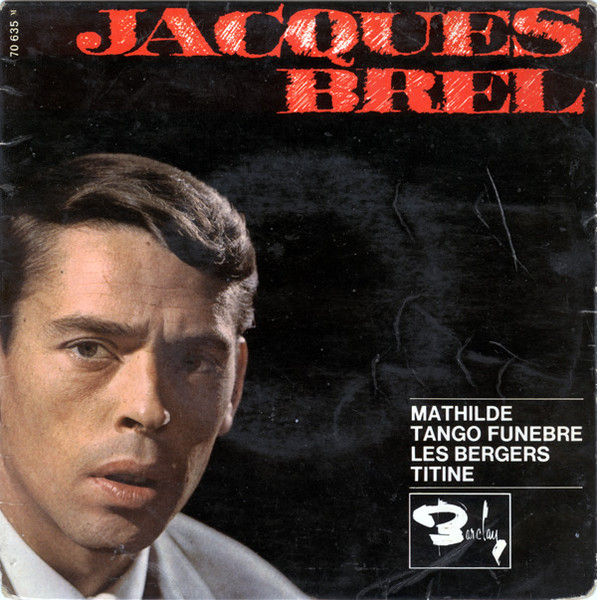
The Mathilde EP, released in March 1964, features four tracks recorded at Barclay-Hoche studios in Paris. The title track, “Mathilde,” recorded on January 9, 1964, is a dramatic tale of a man’s emotional turmoil, amplified by François Rauber’s powerful orchestration. “Le Tango Funèbre,” recorded on March 7, 1964, blends dark humor with a tango rhythm to mock funeral customs and societal hypocrisy.
“Titine,” also recorded on March 7, 1964, brings playful energy with its nod to Charlie Chaplin and a frantic search for a lost love. In contrast, “Les Bergers,” recorded on January 7, 1964, paints a tranquil, pastoral scene of shepherds visiting a village, offering a serene break from the album’s more intense themes.
Analysis
“Mathilde” is one of Jacques Brel’s most dramatic songs with a theatrical arrangement by François Rauber. Recorded on January 9, 1964, at Barclay-Hoche studios in Paris, the song was released as the lead track on this EP and later included on albums such as the 10″ Mathilde (1964) and 12″ Ces gens-là (1966). Its emotional intensity and dynamic narrative propelled it to #28 on the French charts in April 1964.
The song tells the story of a man thrown into emotional turmoil by the unexpected return of a former lover, Mathilde. Oscillating between despair and reckless acceptance, the narrator pleads with his mother to pray for him, knowing the pain Mathilde’s presence has caused him in the past. The repeated refrain “Mathilde est revenue” (“Mathilde’s back”) underscores his helplessness, as he submits to the chaos she brings into his life.
Musically, “Mathilde” builds tension masterfully, with Jouannest’s melody and Rauber’s orchestration mirroring the narrator’s rising emotions. The song crescendos as the narrator, in the final verse, embraces his fate, ordering wine and preparing for his emotional downfall with a dark sense of joy. Brel’s passionate performance, paired with the rich orchestration, makes “Mathilde” a standout example of his ability to blend narrative, emotion, and music.
“Le Tango Funèbre” is a darkly humorous and reflective song by Jacques Brel, with music by Gérard Jouannest and orchestration by François Rauber. Recorded on March 7, 1964, the track also appeared on the 1964 10″ album Mathilde, and the 1966 12″ album Ces gens-là. The song is a satirical meditation on death, funerals, and the absurd rituals surrounding them, all set to a mock-tango rhythm that underscores its irony.
In the song, Brel imagines his own funeral, observing the mourners with a blend of sarcasm and bitterness. He mocks their shallow displays of grief, their concern with appearances, and their hypocritical behavior. The narrator cynically anticipates his friends and family rummaging through his personal belongings and reading his love letters for entertainment, exposing the self-interest and superficiality of those left behind.
Musically, the tango rhythm adds a lively yet grotesque quality to the song, while Rauber’s orchestration heightens its theatricality. Brel’s vocal delivery is filled with biting humor, but the final verse shifts to a more introspective tone as he contemplates his own mortality. This mix of mockery, existential fear, and wit makes “Le Tango Funèbre” a masterful blend of dark humor and poignant reflection on life and death.
“Titine” is a lively and playful song by Jacques Brel, composed in collaboration with Gérard Jouannest and Jean Corti. Recorded on March 7, 1964, it was featured also on the albums Mathilde (1964) and Les Bonbons (1966). The song pays homage to Charlie Chaplin’s famous “Titine” performance in Modern Times (1936) and references the earlier song “Je cherche après Titine,” blending these influences with Brel’s own humor and flair.
Lyrically, the song narrates a comical story of a man searching for Titine, a woman who repeatedly eludes him, often to go watch Chaplin films. The narrator humorously recounts how he searches for her across the globe, only for her to slip away again, now walking like Chaplin or, in an absurd twist, becoming a “talkie” herself. The exaggerated scenarios add to the humor, portraying a frantic chase filled with absurdity and theatricality.
Musically, “Titine” is fast-paced, with a lively arrangement by François Rauber that matches the manic energy of the story. The upbeat rhythm, old-timey feel, and banjo-driven instrumentation evoke the vaudevillian charm of Chaplin’s era. The song’s energy, combined with its nostalgic theme, makes “Titine” both a comic ode to early cinema and a whimsical reflection on changing times.
“Les Bergers” is a lesser piece by Jacques Brel, recorded on January 7, 1964, at the Barclay-Hoche studios in Paris. It features a pastoral theme, vividly portraying rural life and the annual journey of shepherds descending from the mountains. With François Rauber’s arrangement, the song captures the rustic and serene atmosphere of its subject, appearing on this EP the 10″ album Mathilde (1964) and CD reissues of Ces gens-là (1966).
Lyrically, “Les Bergers” depicts the shepherds as both mystical and disruptive figures, whose presence fascinates and unsettles the villagers. Brel describes their seasonal visit as a moment of both charm and mystery, with older shepherds telling tales of fear and wonder, while the younger ones captivate the village girls. The song compares the shepherds’ arrival to a festive event, with food, wine, and brief celebration. However, their visit is fleeting, and the shepherds soon return to their solitary lives in the mountains, leaving the villagers behind to resume their routines.
Musically, the song stands out with its simple vocal melody set against Rauber’s rich orchestration, featuring woodwinds evoking the sound of pan-pipes. This instrumentation enhances the rural atmosphere, making the song feel like a pastoral vignette. While “Les Bergers” is not as emotionally intense as some of Brel’s other works, it offers a tranquil and nostalgic reflection on rural life, serving as a peaceful interlude within the more dramatic pieces of the Mathilde album.
Details
Side A:
- Mathilde
- Le Tango Funèbre (“Funeral Tango”)
Side B:
- Titine
- Les Bergers (“The Shepherds”)
 Collecting Brel