Few discoveries in the world of chanson collecting stop you in your tracks quite like this one...
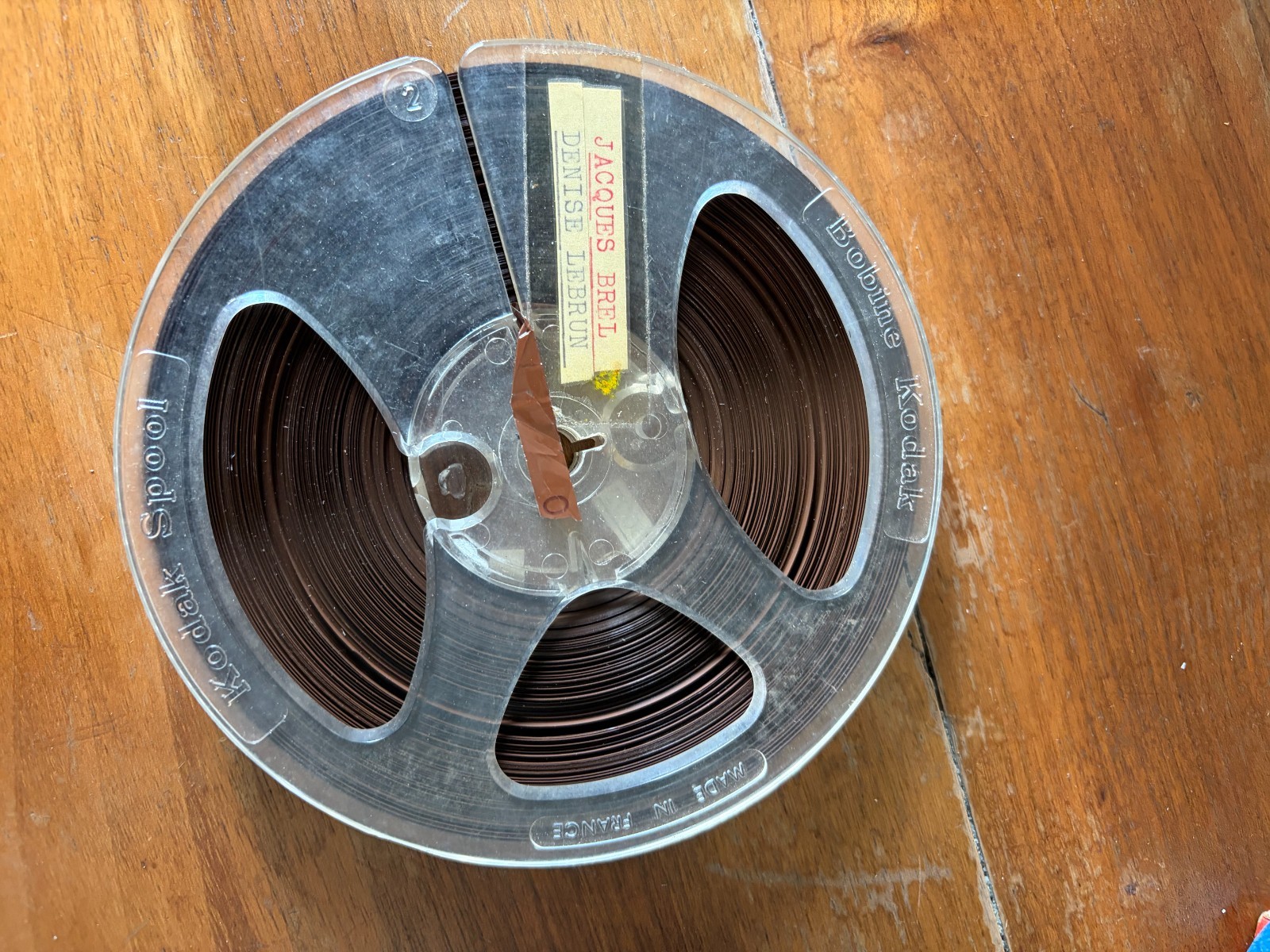
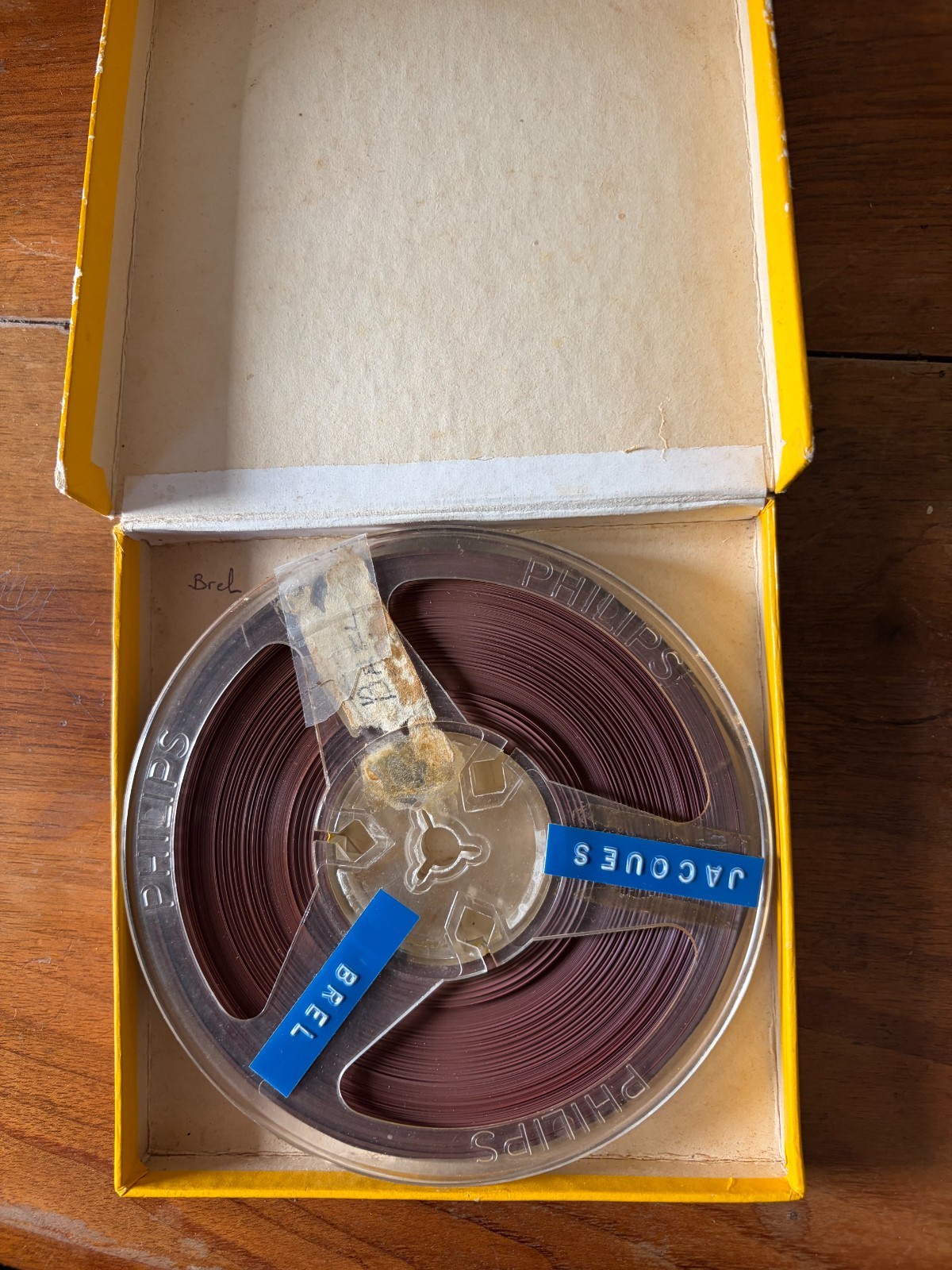
A French collector has come forward with two quarter-inch tape recordings made by his grandfather, Michel Wattelier, former owner of the Cabaret l’Escale in Migennes, Yonne — a small town in Burgundy that Jacques Brel visited in the early 1960s. The recordings were made on a portable Philips double-track machine installed beneath the bar counter, which Wattelier used to capture the room’s atmosphere without disrupting the performance. The tapes have passed to his grandson and are now being offered for sale.
Tape One: Migennes, 3 December 1961
The earlier of the two recordings captures Brel on a Sunday evening in December 1961. He was already a significant name by this point — his Olympia appearances had established him in Paris — but what the Migennes tape preserves is something the official recordings cannot: an intimate cabaret evening in the provinces, far from the prestige venues, with none of the polish or pressure of a major concert recording.
He was accompanied by the Claude Kaeser orchestra and his pianist Gérard Jouannest, the collaborator who would remain at his side for the rest of his performing life.
The setlist: Au Printemps, La Tendresse, On se retrouve Seul, La Dame Patronnesse, Je ne Sais Pas, Les Flamandes, L’Air de la Bêtise, La Fanfare, La Valse à Mille Temps, Ne me Quitte Pas, Quand on n’a que l’Amour
That final pair alone — Ne me quitte pas and Quand on n’a que l’amour — in an intimate Burgundy cabaret, captured on a machine hidden under the bar, is the kind of document collectors spend careers hoping to find. The seller reports the recording quality is good for analogue of this period, though prospective buyers will of course want to verify this independently.
Tape Two: Migennes, 15 December 1963
Two years later, Brel returned to l’Escale for a Sunday evening recital. This time he came with Jouannest alone — just piano, accordion and voice — and the programme had changed entirely. By December 1963 he was performing material that had been hardened by years of relentless touring and sharpened into something far more confrontational than the 1961 set.
The setlist: À mon dernier repas, Rosa, Les Fenêtres, Les Vieux, Mathilde, Les Bonbons, Les Taureaux, Au Suivant, Les Bourgeois
This is Brel at full voltage. The seller notes this was an entirely new programme for the venue, suggesting Brel prepared specifically for the return visit rather than recycling a touring set. The Philips machine beneath the counter captured it all — including, in the seller’s words, “l’atmosphère particulière du music-hall”: the room, the crowd, the particular quality of a performance that was never intended to be preserved. Sound quality is again reported as good by the seller.
Why These Matter
Collectors of French chanson will understand immediately what these recordings represent. Brel left behind a carefully documented studio catalogue and a small number of official live recordings. What barely exists in any form is candid documentation of his work on the cabaret circuit: the smaller venues, the provincial tours, the evenings when he was simply a working performer in front of an ordinary crowd.
The Migennes tapes offer exactly that — twice. Two evenings, two years apart, in the same small room in Burgundy. Original quarter-inch masters, recorded direct to tape. As physical artefacts of early 1960s chanson history, they are exceptional.
Note: As the seller acknowledges in his own listings, the original performance contracts did not include provision for recording. Prospective buyers intending to duplicate or distribute the audio content should seek authorisation from Brel’s estate before doing so.

